
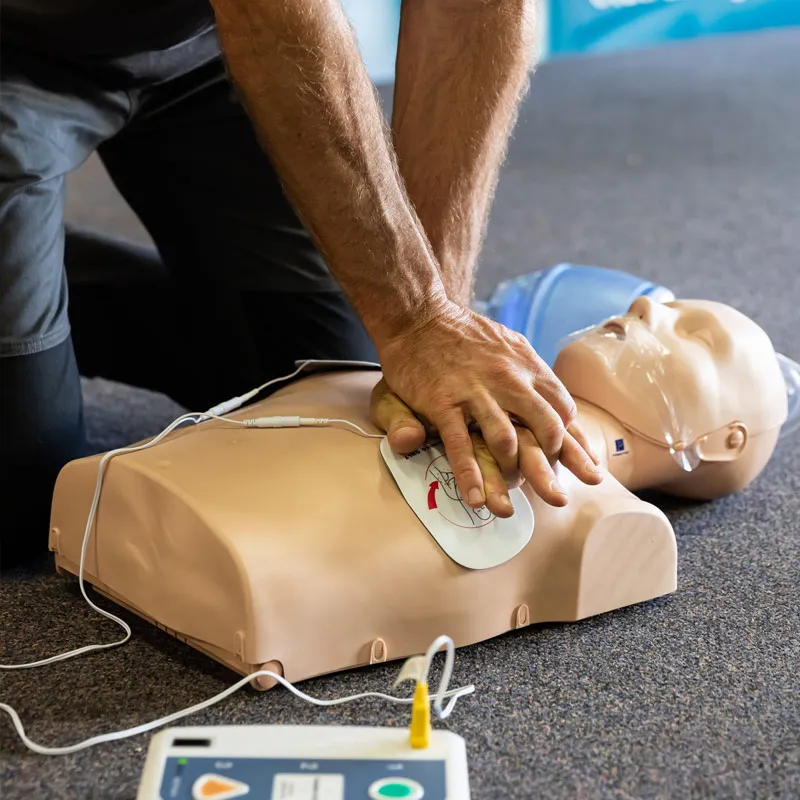
DRSABCD is Australia’s nationally recognised first aid action plan, used in every accredited first aid course across the country. It stands for Danger, Response, Send for Help, Airway, Breathing, CPR, and Defibrillation. Developed and maintained by the Australian Resuscitation Council (ARC), DRSABCD gives first aiders a clear and memorable sequence to follow when someone needs emergency help. Whether you are responding to a cardiac arrest, a collapse, or any other life-threatening situation, DRSABCD provides a structured framework that trained rescuers follow in order, every time.
What Does DRSABCD Stand For?
Each letter in DRSABCD represents a specific action. The steps are designed to be followed in sequence, and each one builds on the last:
- D – Danger: assess the scene for any hazards before approaching
- R – Response: check whether the person is conscious and responding
- S – Send for Help: call Triple Zero (000) or direct someone else to do so
- A – Airway: check that the airway is clear and open
- B – Breathing: check whether the person is breathing normally
- C – CPR: begin cardiopulmonary resuscitation if required
- D – Defibrillation: use an AED if one is available
This sequence replaced the older DRABC protocol when AEDs became widely available in public spaces and research confirmed that early defibrillation and prompt emergency calls were critical to survival outcomes.
In a real emergency, working through this plan correctly and confidently requires more than just knowing what the letters stand for. It requires practice under supervision, which is exactly what a first aid course provides.
When Do You Use DRSABCD?
DRSABCD applies to any situation where someone may be seriously unwell or at risk of cardiac arrest, including:
- Cardiac arrest or sudden collapse
- Unconsciousness from any cause
- A severe allergic reaction (anaphylaxis)
- Choking that leads to unconsciousness
- Near-drowning or electric shock
- Suspected stroke or major trauma
The plan is sequential but practical. You work through the steps that apply to the situation in front of you. Knowing when each step is relevant, and how to carry it out correctly, is something that comes from training with a qualified instructor.
DRSABCD and CPR: How They Work Together
DRSABCD is the framework. CPR is the action that sits within it at the C step. The two are inseparable in practice because DRSABCD ensures that scene safety, emergency services, and airway checks are all completed before CPR begins. A trained first aider understands not just how to perform each step, but why the order matters.
DRSABCD also connects directly to the broader framework for cardiac arrest response known as the chain of survival. Our article on the chain of survival explains how DRSABCD fits into that bigger picture and why bystander action in the first few minutes is so critical.
Why Training Makes DRSABCD Work in Practice
Understanding DRSABCD on paper is a useful starting point. Being able to apply it clearly and calmly in a real emergency is a different thing entirely.
Emergencies are stressful. Without practice, even people who know the acronym can freeze, skip steps, or lose confidence at the moment it counts most. Training under the guidance of experienced instructors builds the kind of automatic, confident response that the plan is designed to produce.
A first aid course puts you through DRSABCD in realistic, hands-on scenarios so that the sequence becomes second nature. You practise on mannequins with real-time instructor feedback, work through simulated emergencies, and leave with the kind of confidence that only comes from having done it, not just read about it.
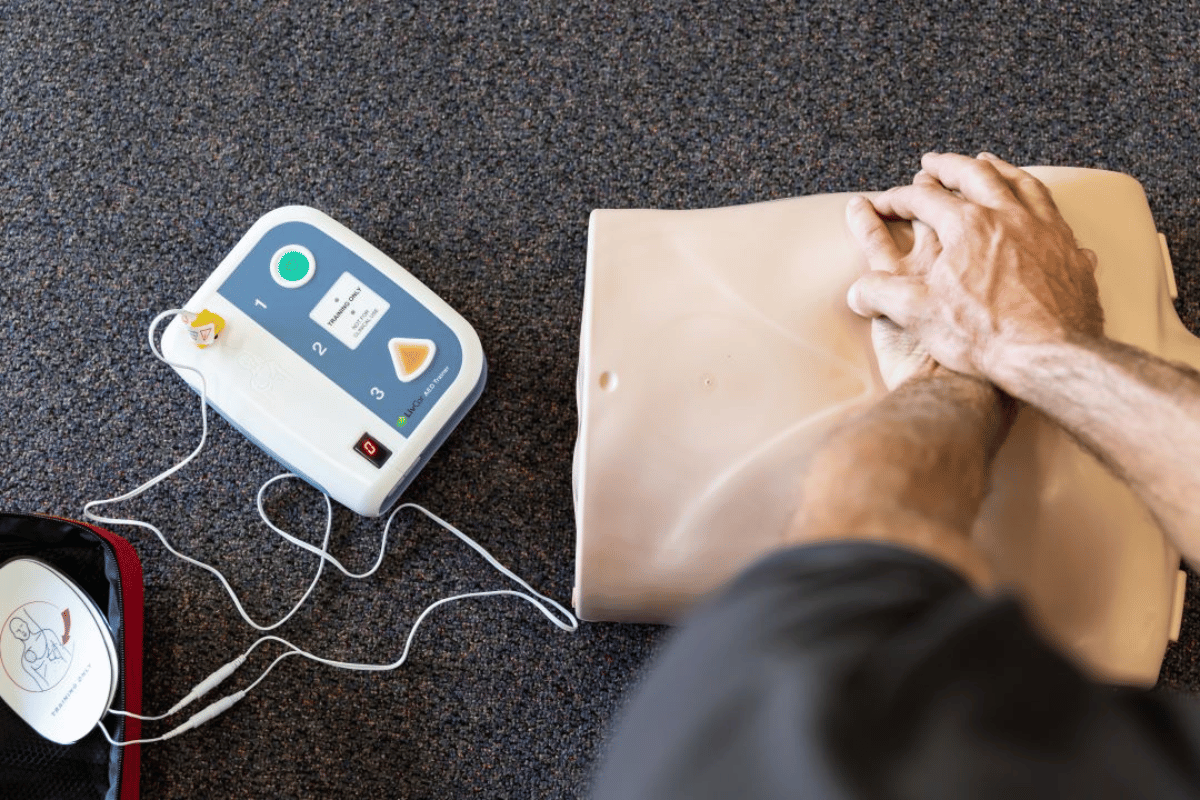
The Australian Resuscitation Council recommends annual CPR renewal to maintain competency, as skills can decline without regular practice. First aid certification requirements also vary by industry and workplace. Your employer or SafeWork WA can advise on the requirements for your specific role.
How to Learn DRSABCD Through First Aid Training
At ETA Training, courses are structured so that you complete the theory component online in your own time, then attend a face-to-face practical session at one of three Perth venues. This blended approach means the classroom time is focused entirely on hands-on practice, which is where DRSABCD really gets learned.
A nationally recognised statement of attainment is issued through Allens Training Pty Ltd (RTO 90909) once both components are complete.

Frequently Asked Questions
Is DRSABCD the same as CPR?
No, but they are closely related. DRSABCD is the full emergency response action plan. CPR is one specific step within it, the C step. First aid training teaches you both: how to work through the complete DRSABCD framework and how to perform CPR correctly within it.
Do I need formal training to use DRSABCD?
Anyone can call 000 in an emergency. But applying DRSABCD correctly under pressure, knowing what each step actually involves and how to carry it out, requires hands-on training with a qualified instructor. That is what first aid courses are for.
How long does a first aid course take?
At ETA Training, the online theory component can be completed in your own time before the course date. The face-to-face practical session is conducted at one of ETA Training’s Perth venues. Check the booking calendar for current session times at Wangara, Welshpool, and Treeby.
Book Your DRSABCD First Aid Training in Perth
Getting certified through ETA Training is a simple four-step process:
- Book using the online course calendar. Choose your course and date, then pay securely online.
- Complete online learning units in your own time. You’ll receive a link once booked to finish the theory before your session.
- Attend the face-to-face practical session at Wangara, Welshpool, or Treeby, where qualified trainers guide you through hands-on skills including DRSABCD and CPR.
- Receive your nationally recognised certification through Allens Training Pty Ltd (RTO 90909).
Visit the ETA Training booking calendar to find a session and get started.
Heading 1
Heading 2
Heading 3
Heading 4
Heading 5
Heading 6
Lorem ipsum dolor sit amet, consectetur adipiscing elit, sed do eiusmod tempor incididunt ut labore et dolore magna aliqua. Ut enim ad minim veniam, quis nostrud exercitation ullamco laboris nisi ut aliquip ex ea commodo consequat. Duis aute irure dolor in reprehenderit in voluptate velit esse cillum dolore eu fugiat nulla pariatur.
Block quote
Ordered list
- Item 1
- Item 2
- Item 3
Unordered list
- Item A
- Item B
- Item C
Bold text
Emphasis
Superscript
Subscript


